The Theology of the Paper Tag: Seeing Christ in the Giving Tree
(For Chasing The Wild Goose — November 2026)
By Mike Carsten OFS
In mid-November, the Catholic liturgical calendar presents a striking convergence: the 10th World Day of the Poor (November 15), followed immediately by the Solemnity of Saint Elizabeth of Hungary and the Annual International Day of OFS Solidarity (November 17).
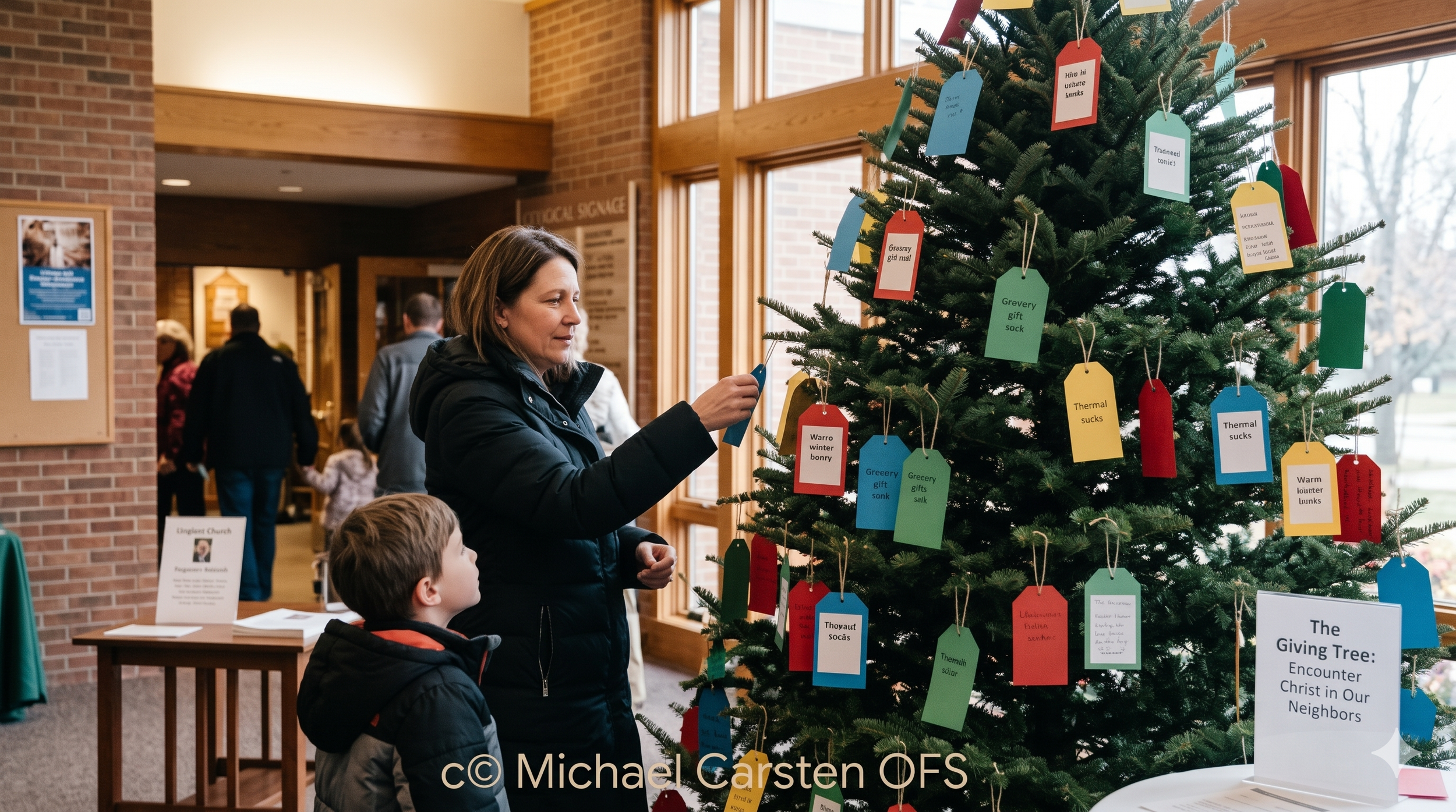
Around this exact time in parishes across Michigan—at St. Paul on the Lake, St. Anastasia, St. Edith, and beyond—trees decorated not with glass baubles, but with humble paper tags, begin to appear in church gathering spaces.
Each tag bears a simple request: warm winter boots for a child in Detroit, a grocery gift card for an elder living alone, or thermal socks for someone sleeping in an emergency shelter.
To a casual observer, a parish Giving Tree might look like ordinary seasonal charity. But to a Secular Franciscan, it is an encounter with the living God.
Saint Elizabeth and the Reality of Solidarity
Saint Elizabeth of Hungary, our female co-patron, did not practice charity from a distant balcony. Born to royal comfort in Wartburg Castle, she refused to let wealth shield her from the suffering of her people. When famine struck, she distributed royal grain; when winter arrived, she built hospitals with her own resources and personally washed the wounds of the sick.
Elizabeth understood what Pope Francis reiterates on the World Day of the Poor: charity gives what is leftover, but solidarity gives oneself.
A paper tag on a Giving Tree is not a shopping assignment; it is a sacramental bridge. Behind each tag is a human being made in the image and likeness of God, carrying burdens that most of us will never have to bear. When a parishioner selects a tag, shops for the item, and wraps it with prayer, two human lives meet in the mystery of the Incarnation.
Making Room at the Inn
Saint Francis spent his youth fleeing from the margins of Assisi until the pivotal day he encountered a leper on the road. When he dismounted his horse and embraced that suffering man, Francis discovered that what had tasted bitter became sweetness of soul and body.
As cold November winds usher in the Michigan winter, the Giving Tree calls us away from holiday consumerism and back to the radical simplicity of Bethlehem. When we reach out our hands to warm the shivering and feed the hungry, we are not simply doing good deeds. We are preparing a dwelling place for Christ, who continues to be born among the least of our brothers and sisters.